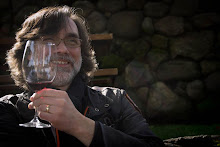
I remember Pastor Miller preaching at Barclay Heights Community Church. We met in the lodge of an old YMCA camp on Esopus Creek near Glenerie Falls. When the lodge became our permanent home, we changed the name of the church to Glenerie Chapel.
I remember Pastor Miller praying; his opening prayers were nearly the equal of his sermons. These were not pithy, punchy, sound-bited perfunctories; his prayers were ten minutes of engagement with God on matters of the day, from local to global.
I remember Pastor Miller’s velvet singing voice. It reminded me of a baritone Andy Williams with a bit of Mel Torme. From where I sat, singing seemed to be pure pleasure for him.
I remember Pastor Miller telling us about Christ’s Passion during a springtime Sunday night service thirty-some years ago. One of the other teens ran out of the lodge, weeping – overtaken by the description of what Jesus had endured for him. I ran after him and listened to his story.
I remember Pastor Miller’s Christianity including humanness. He didn’t try to portray himself as saintly; he wasn’t aloof from his congregation. He wasn’t afraid to laugh.
I don’t remember when Pastor Miller invited me to call him “Bob”. The truth is I never really got used to it. He was simply “Pastor” to me.
I remember Pastor Miller saying he thought I’d become a pastor someday. I didn’t like that, and I fought it for a long time. But over the years, his was among a small number of voices through which God conferred that calling to me. I don’t wear it as comfortably as he did but I try to be true to my legacy.
Today, I’m remembering to remember because it’s the day of Pastor’s memorial service. I wish I could be present. He and his family are very much on my mind. I’m praying they feel the support of their communities as they find their way forward. I’m praying they know they’re not carrying his memory alone. And I’m praying they find grace today to celebrate him with all their might.
Showing posts with label Faith-Life. Show all posts
Showing posts with label Faith-Life. Show all posts
Friday, March 28, 2008


Friday, March 14, 2008
this day's bread
Give us this day our bread of this day
and which this day alone can give us,
at the same time that this very day is given to us.
Jean-Luc Marion
and which this day alone can give us,
at the same time that this very day is given to us.
Jean-Luc Marion
Thursday, March 06, 2008
new things
“See, the former things have taken place,
and new things I declare;
before they spring into being
I announce them to you.” Isaiah 42:9, NIV
The way of faith is not static. Belief moves. God’s call, God’s song unfolds dynamically over time. It’s not a puzzle we solve. It is unfrozen.
Humans were not made for stasis; even our brains function best when we’re in motion. Scientist and author, John Medina, explains this phenomenon in his new book, Brain Rules.
Clearly, the interplay between physical and mental vitality is profound. I suggest spiritual vigor is integral to the same equation. Our place in creation isn’t merely decorative! We’re made to be played, saxophone-like, resonating with the Creator’s breath.
God reaches toward us from our not-yet and invites us to lean into his all-things-work-together-for-good. This is what it means to follow Jesus. This is why we aren’t interested in religion as usual. This is how we find ourselves flourishing at the edge of brand new things.
“We know that all things work together for the good of those who love God: those who are called according to His purpose.”
Romans 8:28 (Holman Christian Standard Bible)
Copyright Scott Burnett 2006
and new things I declare;
before they spring into being
I announce them to you.” Isaiah 42:9, NIV
The way of faith is not static. Belief moves. God’s call, God’s song unfolds dynamically over time. It’s not a puzzle we solve. It is unfrozen.
Humans were not made for stasis; even our brains function best when we’re in motion. Scientist and author, John Medina, explains this phenomenon in his new book, Brain Rules.
Exercise increases oxygen flow into the brain, which reduces brain-bound free radicals. One of the most interesting findings of the past few decades is that an increase in oxygen is always accompanied by an uptick in mental sharpness.
Exercise acts directly on the molecular machinery of the brain itself. It increases neurons’ creation, survival, and resistance to damage and stress. http://www.brainrules.net/
Clearly, the interplay between physical and mental vitality is profound. I suggest spiritual vigor is integral to the same equation. Our place in creation isn’t merely decorative! We’re made to be played, saxophone-like, resonating with the Creator’s breath.
God reaches toward us from our not-yet and invites us to lean into his all-things-work-together-for-good. This is what it means to follow Jesus. This is why we aren’t interested in religion as usual. This is how we find ourselves flourishing at the edge of brand new things.
“We know that all things work together for the good of those who love God: those who are called according to His purpose.”
Romans 8:28 (Holman Christian Standard Bible)
Copyright Scott Burnett 2006
Saturday, January 05, 2008
John 12:1-11 (premeditation)
In the first part of John 12, the religious power brokers are so afraid of Jesus and Lazarus that they begin to plot their murders in earnest. Why? It makes sense that they’d be irate at Jesus for exposing the emptiness of their illusion. And I can see why they’d want to destroy the evidence, so to speak, by erasing the resurrected Lazarus from the scene.
But I don’t see how they could unequivocally dismiss the possibility that Jesus was telling (and living) the truth. How could they be so sold out to their own propaganda that they couldn’t see the sense-making beauty in what Jesus was saying and doing?
One of the reasons I’m so bothered by this riddle is my uneasy feeling that I could do the same thing. What am I guarding? What am I dismissing? What are the fears in me that skew my perceptions? Whose ideas am I ready to erase in order to protect my own?
Copyright Scott Burnett 2006
But I don’t see how they could unequivocally dismiss the possibility that Jesus was telling (and living) the truth. How could they be so sold out to their own propaganda that they couldn’t see the sense-making beauty in what Jesus was saying and doing?
One of the reasons I’m so bothered by this riddle is my uneasy feeling that I could do the same thing. What am I guarding? What am I dismissing? What are the fears in me that skew my perceptions? Whose ideas am I ready to erase in order to protect my own?
Copyright Scott Burnett 2006
Wednesday, November 21, 2007
Thanksgiving Blessing
Even as we express our gratitude for God’s good gifts,
We receive the gift of gratitude itself;
Pressed down and overflowing.
Let us seek the way of pure kindness…
In the name of the Father.
Let us shut the door on anxiety…
In the name of Jesus.
Let us remember beauty…
In the name of the Holy Spirit.
Even as we express our gratitude for God’s good gifts,
We receive the gift of gratitude itself;
Pressed down and overflowing…
Pressed down and overflowing.
Amen
We receive the gift of gratitude itself;
Pressed down and overflowing.
Let us seek the way of pure kindness…
In the name of the Father.
Let us shut the door on anxiety…
In the name of Jesus.
Let us remember beauty…
In the name of the Holy Spirit.
Even as we express our gratitude for God’s good gifts,
We receive the gift of gratitude itself;
Pressed down and overflowing…
Pressed down and overflowing.
Amen
Monday, October 29, 2007
controversy
Jesus used controversy to engage the religious elite. It’s odd that some of us who aspire to follow Jesus sometimes (often?) fall into the same sort of closed-system thought that afflicted the Pharisees. Perhaps paradoxically, following Jesus involves an ongoing openness to changing ones own current opinions about what it means to follow Jesus!
Saturday, October 06, 2007
overcoming unfaith
In the 9th chapter of Mark’s Gospel, a helpless father desperately implores Jesus to rescue his son. He stands uneasily yet candidly at the crossroads of belief and unbelief. Jesus meets him there.
This kind of faith is not an unquestioning allegiance to ideology. It isn’t reflected in bumper-sticker quips like, “God said it, I believe it, that settles it.”
The simple, soulful confession of this kind of faith is, “Lord, I believe, help thou my unbelief.” This kind of faith exhibits the virtue of skepticism.
In the field of philosophy there are (at least…) two types of skepticism: Academic and Pyrrhonian. Academic skepticism asserts the impossibility of truly knowing anything. Its fatal flaw is its own logic: i.e., How can we truly know that it is impossible to truly know anything?
But Pyrrhonian skepticism accommodates an open-minded pursuit of truth. It acknowledges the severe difficulty of apprehending ultimate knowledge while allowing the possibility of knowing truly.
“Christian faith in God is not a naïve basic truth. It is unfaith that has been overcome” Jurgen Moltmann
Copyright Scott Burnett 2006
This kind of faith is not an unquestioning allegiance to ideology. It isn’t reflected in bumper-sticker quips like, “God said it, I believe it, that settles it.”
The simple, soulful confession of this kind of faith is, “Lord, I believe, help thou my unbelief.” This kind of faith exhibits the virtue of skepticism.
In the field of philosophy there are (at least…) two types of skepticism: Academic and Pyrrhonian. Academic skepticism asserts the impossibility of truly knowing anything. Its fatal flaw is its own logic: i.e., How can we truly know that it is impossible to truly know anything?
But Pyrrhonian skepticism accommodates an open-minded pursuit of truth. It acknowledges the severe difficulty of apprehending ultimate knowledge while allowing the possibility of knowing truly.
“Christian faith in God is not a naïve basic truth. It is unfaith that has been overcome” Jurgen Moltmann
Copyright Scott Burnett 2006
Friday, September 07, 2007
astonished
"Let us not be too sure we know the Bible just because we have learned not to be astonished by it" Thomas Merton (from Opening the Bible)
Monday, May 28, 2007
harmony
"The outward harmony that we desire between our economy and the world depends finally upon an inward harmony between our own hearts and the originating spirit that is the life of all creatures, a spirit as near us as our flesh and yet forever beyond the measure of this obsessively measuring age. We can grow good wheat and grow good bread only if we understand that we do not live by bread alone."
Wendell Berry
Wendell Berry
Friday, May 11, 2007
inimitable
"Almost any other apologetic for the Christian faith can be memorized, rehearsed, and delivered without effect except the apologetic of love. Love, which of its essence seeks only the good of others and is willing to pay the high price of self-forgetfulness is a product that is hard to imitate or counterfeit."
John Powell, S.J.
John Powell, S.J.
Monday, May 07, 2007
church perspective (Mayhew)
"The church is not an institution 'out there', which I support. It is the community that enfolds and identifies who I am as an individual."
Ray Mayhew
Ray Mayhew
Sunday, January 14, 2007
perichoresis
The model of relationships portrayed by the trinitarian dogma is neither hierarchical nor authoritarian. The relationship of Father, Son, and Holy Spirit is not subordinationist, but – to use the technical term – perichoretic: God is essentially a dynamic communion of equally and mutually shared love. And this fact implies social impetus. Being made in the image of God calls for ethical and social consequences, it nurtures the spirit of solidarity. Of course, these consequences cannot be simply, mechanically transferred to the areas of human relationships. But they lead, or should lead, the confessor’s heart in an unambiguous direction – toward guarding the faith in the communion of creative love.
Jan Milic Lochman
Jan Milic Lochman
Tuesday, November 14, 2006
Deeds
"So long as the word remains in any way theoretical and is not incarnated by actions and translated into deeds, then it is not faith. It might be theology, not very good theology at that, but it is not faith. Faith is a combination of conviction and deeds, and it cannot be one without the other. Faith divorced from deeds is as lifeless as a corpse."
Murphy Davis, in "Turning Dreams into Deeds," Sojourners, June 1985
My friend Brian sent this to me recently because he thought I'd resonate with it. He was right.
Murphy Davis, in "Turning Dreams into Deeds," Sojourners, June 1985
My friend Brian sent this to me recently because he thought I'd resonate with it. He was right.
Friday, June 16, 2006
equity
“Teach me to number my days.”
I’ve been making a concerted effort to consistently reassess my time equity. What do I have to work with? How am I spending it, investing it, wasting it, enjoying it...?
In 2016, how will I feel about the way I spent 2006?
I’ve been making a concerted effort to consistently reassess my time equity. What do I have to work with? How am I spending it, investing it, wasting it, enjoying it...?
In 2016, how will I feel about the way I spent 2006?
Tuesday, May 30, 2006
awful coffee and a Lorna Doone
Bleary-eyed and hours from home, struggling to stay awake... Awful coffee and a Lorna Doone cookie at the rest stop... Okay, I think I can make it for another chunk of miles.
Thank God for the Rotary and Kiwanis people who cheerfully host those simple oases.
Maybe that’s what weekly church services are for: offering simple, spiritual hospitality and helping souls stay awake to their faith journeys.
Thank God for the Rotary and Kiwanis people who cheerfully host those simple oases.
Maybe that’s what weekly church services are for: offering simple, spiritual hospitality and helping souls stay awake to their faith journeys.
Friday, April 07, 2006
Lawn and Garden Care
An ideal lawn is completely uniform. The grass is one height, one texture, and one shade of green. Needless to say, weeds, moss, and wildflowers have no business there. It would never be confused with the wild; it is set apart from nature. It covers a clearly defined area like a cool, green carpet.
A garden, on the other hand, celebrates variety. It is home to an assortment of plants, each with its own needs and qualities. Deciduous, evergreen, creeping, climbing, twiggy, bushy, leafy, shade-loving, sun-craving, drought-resistant, frost-sensitive, hardy, showy, modest, etc… It is a place for wildly diverse expressions of planthood.
The ideal garden is a seamless, living truce between the tame and the wild – between humans and nature. Lawns, on the other hand, are human creations; nature has only a limited role with them. A proper lawn can’t exist without a lawnmower. Conversely, the thought of mowing a garden is as ludicrous as it is disturbing!
Is the church more like a lawn or a garden? It’s easier to manage a large group of people if their maintenance can be standardized. The same watering regimen, the same fertilizer and the same dose of weed-killer work for everyone. Measuring progress is far less complicated if the target is conformity to one standard.
Sameness isn’t holiness, though. Our challenge is to bring ourselves into alignment with Christ’s image, not conform to someone’s notion of the ideal Christian. It will require a host of believers, each reflecting Christ’s image according to their own unique styles, to even begin to express the vast loveliness of Jesus.
In my opinion, the Creator wants a garden. Jesus interacted with people in all sorts of ways; his approaches were as diverse as the people themselves were. The only group he tended to address in broad, generalized terms was the group that wanted to mow humanity: the religious elite. But it is obvious that his true passion was for individuals. He engaged people creatively and uniquely; he delighted in discovering and illuminating each person’s interior.
A lawn church is fertilized and weeded with a toxic concoction of religion and subculture. Legalism is its lawnmower. It is artificially sustained, separate from both God’s kingdom and the world.
Conversely, the garden church celebrates variety. It is home to assorted humans with assorted needs and qualities. Some are colorful, some muted – some kinetic, some reserved – some produce spiritual fruit continually, while some require seasons of rest after harvests. Some are as fussy as roses; some are as hardy (and occasionally as invasive…) as weeds. Some are as strong as trees, and some cling like vines. Some announce their yield of fruit with showy blossoms, and others bear their fruit invisibly underground. The garden church is a place for wildly diverse expressions of the human faith-journey.
A garden, on the other hand, celebrates variety. It is home to an assortment of plants, each with its own needs and qualities. Deciduous, evergreen, creeping, climbing, twiggy, bushy, leafy, shade-loving, sun-craving, drought-resistant, frost-sensitive, hardy, showy, modest, etc… It is a place for wildly diverse expressions of planthood.
The ideal garden is a seamless, living truce between the tame and the wild – between humans and nature. Lawns, on the other hand, are human creations; nature has only a limited role with them. A proper lawn can’t exist without a lawnmower. Conversely, the thought of mowing a garden is as ludicrous as it is disturbing!
Is the church more like a lawn or a garden? It’s easier to manage a large group of people if their maintenance can be standardized. The same watering regimen, the same fertilizer and the same dose of weed-killer work for everyone. Measuring progress is far less complicated if the target is conformity to one standard.
Sameness isn’t holiness, though. Our challenge is to bring ourselves into alignment with Christ’s image, not conform to someone’s notion of the ideal Christian. It will require a host of believers, each reflecting Christ’s image according to their own unique styles, to even begin to express the vast loveliness of Jesus.
In my opinion, the Creator wants a garden. Jesus interacted with people in all sorts of ways; his approaches were as diverse as the people themselves were. The only group he tended to address in broad, generalized terms was the group that wanted to mow humanity: the religious elite. But it is obvious that his true passion was for individuals. He engaged people creatively and uniquely; he delighted in discovering and illuminating each person’s interior.
A lawn church is fertilized and weeded with a toxic concoction of religion and subculture. Legalism is its lawnmower. It is artificially sustained, separate from both God’s kingdom and the world.
Conversely, the garden church celebrates variety. It is home to assorted humans with assorted needs and qualities. Some are colorful, some muted – some kinetic, some reserved – some produce spiritual fruit continually, while some require seasons of rest after harvests. Some are as fussy as roses; some are as hardy (and occasionally as invasive…) as weeds. Some are as strong as trees, and some cling like vines. Some announce their yield of fruit with showy blossoms, and others bear their fruit invisibly underground. The garden church is a place for wildly diverse expressions of the human faith-journey.
Tuesday, March 21, 2006
No Further Burden
“For it has seemed right to the Holy Spirit and to us to lay no further burden upon you except what is absolutely essential...” Acts 15:28
The Acts of the Apostles is a great little adventure story; it is pretty-much a sequel to the Gospel narratives (Luke’s account, in particular).
It’s worth noting that the Gospel is simplified each time it takes root in a new community. The religio-cultural framework of the sending-people is stripped down to bare essentials. Barriers to faith are removed; space is made to accommodate symbiotic pieces of the receiving-people’s culture into a localized iteration of Christianity.
Evangelism provides senders with an opportunity to reconsider the essentials of faith, from the vantage point of their intended receivers. Preferences and assumptions can be held up to the light once again; perspectives can be realigned to what the Holy Spirit is conveying.
The Acts of the Apostles is a great little adventure story; it is pretty-much a sequel to the Gospel narratives (Luke’s account, in particular).
It’s worth noting that the Gospel is simplified each time it takes root in a new community. The religio-cultural framework of the sending-people is stripped down to bare essentials. Barriers to faith are removed; space is made to accommodate symbiotic pieces of the receiving-people’s culture into a localized iteration of Christianity.
Evangelism provides senders with an opportunity to reconsider the essentials of faith, from the vantage point of their intended receivers. Preferences and assumptions can be held up to the light once again; perspectives can be realigned to what the Holy Spirit is conveying.
Sunday, March 12, 2006
James [Mr. Buzzkill] part one
The first paragraph of the Letter from James (New Testament) includes the phrase, “of mature character with the right sort of independence.” [J.B. Phillips Translation]
I want that. I really, really want that. The trouble is that James says it comes as a gift of trials and temptations. (Deng-it!)
James says to trust the process: “...let the process go on until that endurance is fully developed.” If I’m extrapolating correctly, what’s being suggested here is that independence (the right sort, at any rate) depends on patience.
Hmm... Yet another paradox of the faith-venture of following Jesus.
I want that. I really, really want that. The trouble is that James says it comes as a gift of trials and temptations. (Deng-it!)
James says to trust the process: “...let the process go on until that endurance is fully developed.” If I’m extrapolating correctly, what’s being suggested here is that independence (the right sort, at any rate) depends on patience.
Hmm... Yet another paradox of the faith-venture of following Jesus.
Thursday, March 09, 2006
Decipher
I currently have a crush on the word decipher because of the fetching poetry of its etymology.
cipher = zero; therefore, decipher = de:zero making nothing into not-nothing un-nothing-ing nothingHere’s the thing: we communicate via symbols and gestures encoded with meanings. Until decoded (deciphered), our symbols and gestures are null and void of meaning. Zero communication occurs.*
The Jesus Story deciphers the Creator-Created relationship (which is arguably at the heart of human meaning).
Maybe the life of faith boils down to inhabiting the deconstruction of meaninglessness.
Go into all the world and decipher...
Enact
Isn’t it powerful when ideas become actions?
Pressing the unseen into the seen...
Translating belief into behavior...
A sacrament is defined as:
“A rite believed to be a means of or visible form of grace…”
(The American Heritage® Dictionary of the English Language, Fourth Edition)
Baptism and Communion are central Christian sacraments: bread and wine to taste, cold water to feel... spiritual stuff enacted physically.
The church itself is a sort of sacrament, isn’t it? We are challenged to live out the Gospel -- to express God’s kingdom in our deeds.
“Faith by itself, if it is not accompanied by action, is dead.”
James 2:17 (NIV)
“Faith without action is as dead as a body without a soul.”
James 2:26 (Phillips)
Pressing the unseen into the seen...
Translating belief into behavior...
A sacrament is defined as:
“A rite believed to be a means of or visible form of grace…”
(The American Heritage® Dictionary of the English Language, Fourth Edition)
Baptism and Communion are central Christian sacraments: bread and wine to taste, cold water to feel... spiritual stuff enacted physically.
The church itself is a sort of sacrament, isn’t it? We are challenged to live out the Gospel -- to express God’s kingdom in our deeds.
“Faith by itself, if it is not accompanied by action, is dead.”
James 2:17 (NIV)
“Faith without action is as dead as a body without a soul.”
James 2:26 (Phillips)
Subscribe to:
Posts (Atom)