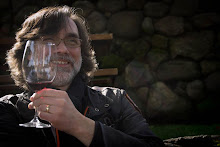
My friend Doug knows what it means to be a good neighbor. He came over at 9:00 a couple nights ago to help me install a new dishwasher. We got a late start because we’d each had very long workdays.
The installation didn’t follow the script. (Do they ever, I wonder?). It was impossible to discern which breaker the electrical was wired to so we turned them all off. Of course, that meant doing much of the job by flashlight.
The not-so-helpful instructions estimated the job should take between one and three hours. Doug left our house at 1:00 in the morning. He was still smiling. Perhaps even more striking was the utter absence of profanity! That’s a good neighbor. In fact, for those four hours at least, I’d say Doug’s neighborliness bordered on the saintly.
Grace arrives in many forms. I’ve found, though, that it usually involves a palpably personal and relational element. Grace usually entails somebody choosing to be available as its conduit.
Copyright Scott Burnett 2006
Showing posts with label Grace. Show all posts
Showing posts with label Grace. Show all posts
Friday, December 07, 2007


Saturday, September 09, 2006
Hope
“Why art thou cast down, O my soul? And why art thou disquieted within me? Hope thou in God, for I shall yet praise Him, who is the health of my countenance and my God.”
Psalm 42:11 (21st Century King James Version)
Hope is integral to Emotional Endurance [see table]. What feeds my heart’s fire if not hope? And what distinguishes hoping from wishing? For me, hope is the belief that God is planting goodness in the future so that it’s already taking root and blooming as we step into each unfolding day.
Here's an ancient prophetic poem that was composed by a person who understood the valley of deep trouble. His words have the heartbeat of authenticity.
“There I will give her back her vineyards,
and will make the Valley of Trouble a door of hope.
There she will sing as in the days of her youth,
as in the day she came up out of Egypt.”
Hosea 2:15 (New International Version)
First, God promises to restore vineyards, which represent abundance and gladness. Then follows an image that I find profoundly moving: God will transform the valley of trouble into a door of hope. The lowest, most disturbing circumstance becomes the threshold to a good future.
The second sentence begins with the response of the people, which is carefree singing: a picture of rejuvenation and festivity. The closing line references release from slavery, and the long-awaited freedom to engage life.
That’s what this Fourfold Fitness thing is about, really [see intro]. I don’t need to be a slave to disconnection and disintegration; by God’s grace, I’m free to cultivate practices that increase my capacity for living.
Copyright Scott Burnett 2006
Psalm 42:11 (21st Century King James Version)
Hope is integral to Emotional Endurance [see table]. What feeds my heart’s fire if not hope? And what distinguishes hoping from wishing? For me, hope is the belief that God is planting goodness in the future so that it’s already taking root and blooming as we step into each unfolding day.
Here's an ancient prophetic poem that was composed by a person who understood the valley of deep trouble. His words have the heartbeat of authenticity.
“There I will give her back her vineyards,
and will make the Valley of Trouble a door of hope.
There she will sing as in the days of her youth,
as in the day she came up out of Egypt.”
Hosea 2:15 (New International Version)
First, God promises to restore vineyards, which represent abundance and gladness. Then follows an image that I find profoundly moving: God will transform the valley of trouble into a door of hope. The lowest, most disturbing circumstance becomes the threshold to a good future.
The second sentence begins with the response of the people, which is carefree singing: a picture of rejuvenation and festivity. The closing line references release from slavery, and the long-awaited freedom to engage life.
That’s what this Fourfold Fitness thing is about, really [see intro]. I don’t need to be a slave to disconnection and disintegration; by God’s grace, I’m free to cultivate practices that increase my capacity for living.
Copyright Scott Burnett 2006
Monday, May 22, 2006
legalism and grace
Legalism is easier than grace. Or at least it has a heavier gravitational pull. Most religions and ideologies seem to bend that way.
Law is legislatable and grace is not. That’s why attempting to politically impose Christian morals on a society is a dalliance with the devil: it necessitates a shift away from the heart of the Gospel.
We prefer to create systems of thought and behavior to which we can adhere, or against which we can rebel. These are the polar extremes portrayed in the parable of the Prodigal Son: the older brother versus the prodigal. Whether in compliance or defiance, law sells itself as simpler to manage than grace.
The way of grace traverses a different grid altogether than the compliance-defiance continuum.
Law is legislatable and grace is not. That’s why attempting to politically impose Christian morals on a society is a dalliance with the devil: it necessitates a shift away from the heart of the Gospel.
We prefer to create systems of thought and behavior to which we can adhere, or against which we can rebel. These are the polar extremes portrayed in the parable of the Prodigal Son: the older brother versus the prodigal. Whether in compliance or defiance, law sells itself as simpler to manage than grace.
The way of grace traverses a different grid altogether than the compliance-defiance continuum.
Thursday, March 09, 2006
Enact
Isn’t it powerful when ideas become actions?
Pressing the unseen into the seen...
Translating belief into behavior...
A sacrament is defined as:
“A rite believed to be a means of or visible form of grace…”
(The American Heritage® Dictionary of the English Language, Fourth Edition)
Baptism and Communion are central Christian sacraments: bread and wine to taste, cold water to feel... spiritual stuff enacted physically.
The church itself is a sort of sacrament, isn’t it? We are challenged to live out the Gospel -- to express God’s kingdom in our deeds.
“Faith by itself, if it is not accompanied by action, is dead.”
James 2:17 (NIV)
“Faith without action is as dead as a body without a soul.”
James 2:26 (Phillips)
Pressing the unseen into the seen...
Translating belief into behavior...
A sacrament is defined as:
“A rite believed to be a means of or visible form of grace…”
(The American Heritage® Dictionary of the English Language, Fourth Edition)
Baptism and Communion are central Christian sacraments: bread and wine to taste, cold water to feel... spiritual stuff enacted physically.
The church itself is a sort of sacrament, isn’t it? We are challenged to live out the Gospel -- to express God’s kingdom in our deeds.
“Faith by itself, if it is not accompanied by action, is dead.”
James 2:17 (NIV)
“Faith without action is as dead as a body without a soul.”
James 2:26 (Phillips)
Monday, March 06, 2006
Choices, part 4 [Joshua ch.4]
The burden of blessing... I wonder if that is part of the point of the twelve stones taken from the riverbed. There seems to be a certain weight of responsibility that comes with divine favor.
Of course, the stones also provided material evidence of what God had done. When the people woke up the next morning, no doubt feeling disoriented by grace, the stones might have helped ground them in their new reality.
Of course, the stones also provided material evidence of what God had done. When the people woke up the next morning, no doubt feeling disoriented by grace, the stones might have helped ground them in their new reality.
Subscribe to:
Posts (Atom)