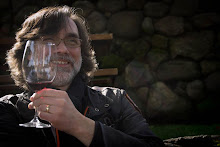
"We arrive in this world with birthright gifts -- then we spend the first half of our lives abandoning them or letting others disabuse us of them. As young people, we are surrounded by expectations that may have little to do with who we really are, expectations held by people who are not trying to discern our selfhood but to fit us into slots. In families, schools, workplaces, and religious communities, we are trained away from true self toward images of acceptability; under social pressures like racism and sexism our original shape is deformed beyond recognition; and we ourselves, driven by fear, too often betray true self to gain the approval of others.
We are disabused of original giftedness in the first half of our lives. Then -- if we are awake, aware, and able to admit our loss -- we spend the second half trying to recover and reclaim the gift we once possessed."
Parker J. Palmer
"Let Your Life Speak"
Showing posts with label Authenticity. Show all posts
Showing posts with label Authenticity. Show all posts
Wednesday, April 23, 2008


Saturday, October 06, 2007
overcoming unfaith
In the 9th chapter of Mark’s Gospel, a helpless father desperately implores Jesus to rescue his son. He stands uneasily yet candidly at the crossroads of belief and unbelief. Jesus meets him there.
This kind of faith is not an unquestioning allegiance to ideology. It isn’t reflected in bumper-sticker quips like, “God said it, I believe it, that settles it.”
The simple, soulful confession of this kind of faith is, “Lord, I believe, help thou my unbelief.” This kind of faith exhibits the virtue of skepticism.
In the field of philosophy there are (at least…) two types of skepticism: Academic and Pyrrhonian. Academic skepticism asserts the impossibility of truly knowing anything. Its fatal flaw is its own logic: i.e., How can we truly know that it is impossible to truly know anything?
But Pyrrhonian skepticism accommodates an open-minded pursuit of truth. It acknowledges the severe difficulty of apprehending ultimate knowledge while allowing the possibility of knowing truly.
“Christian faith in God is not a naïve basic truth. It is unfaith that has been overcome” Jurgen Moltmann
Copyright Scott Burnett 2006
This kind of faith is not an unquestioning allegiance to ideology. It isn’t reflected in bumper-sticker quips like, “God said it, I believe it, that settles it.”
The simple, soulful confession of this kind of faith is, “Lord, I believe, help thou my unbelief.” This kind of faith exhibits the virtue of skepticism.
In the field of philosophy there are (at least…) two types of skepticism: Academic and Pyrrhonian. Academic skepticism asserts the impossibility of truly knowing anything. Its fatal flaw is its own logic: i.e., How can we truly know that it is impossible to truly know anything?
But Pyrrhonian skepticism accommodates an open-minded pursuit of truth. It acknowledges the severe difficulty of apprehending ultimate knowledge while allowing the possibility of knowing truly.
“Christian faith in God is not a naïve basic truth. It is unfaith that has been overcome” Jurgen Moltmann
Copyright Scott Burnett 2006
Saturday, September 09, 2006
Hope
“Why art thou cast down, O my soul? And why art thou disquieted within me? Hope thou in God, for I shall yet praise Him, who is the health of my countenance and my God.”
Psalm 42:11 (21st Century King James Version)
Hope is integral to Emotional Endurance [see table]. What feeds my heart’s fire if not hope? And what distinguishes hoping from wishing? For me, hope is the belief that God is planting goodness in the future so that it’s already taking root and blooming as we step into each unfolding day.
Here's an ancient prophetic poem that was composed by a person who understood the valley of deep trouble. His words have the heartbeat of authenticity.
“There I will give her back her vineyards,
and will make the Valley of Trouble a door of hope.
There she will sing as in the days of her youth,
as in the day she came up out of Egypt.”
Hosea 2:15 (New International Version)
First, God promises to restore vineyards, which represent abundance and gladness. Then follows an image that I find profoundly moving: God will transform the valley of trouble into a door of hope. The lowest, most disturbing circumstance becomes the threshold to a good future.
The second sentence begins with the response of the people, which is carefree singing: a picture of rejuvenation and festivity. The closing line references release from slavery, and the long-awaited freedom to engage life.
That’s what this Fourfold Fitness thing is about, really [see intro]. I don’t need to be a slave to disconnection and disintegration; by God’s grace, I’m free to cultivate practices that increase my capacity for living.
Copyright Scott Burnett 2006
Psalm 42:11 (21st Century King James Version)
Hope is integral to Emotional Endurance [see table]. What feeds my heart’s fire if not hope? And what distinguishes hoping from wishing? For me, hope is the belief that God is planting goodness in the future so that it’s already taking root and blooming as we step into each unfolding day.
Here's an ancient prophetic poem that was composed by a person who understood the valley of deep trouble. His words have the heartbeat of authenticity.
“There I will give her back her vineyards,
and will make the Valley of Trouble a door of hope.
There she will sing as in the days of her youth,
as in the day she came up out of Egypt.”
Hosea 2:15 (New International Version)
First, God promises to restore vineyards, which represent abundance and gladness. Then follows an image that I find profoundly moving: God will transform the valley of trouble into a door of hope. The lowest, most disturbing circumstance becomes the threshold to a good future.
The second sentence begins with the response of the people, which is carefree singing: a picture of rejuvenation and festivity. The closing line references release from slavery, and the long-awaited freedom to engage life.
That’s what this Fourfold Fitness thing is about, really [see intro]. I don’t need to be a slave to disconnection and disintegration; by God’s grace, I’m free to cultivate practices that increase my capacity for living.
Copyright Scott Burnett 2006
Subscribe to:
Comments (Atom)